Your SMS, built by someone who used to inspect them
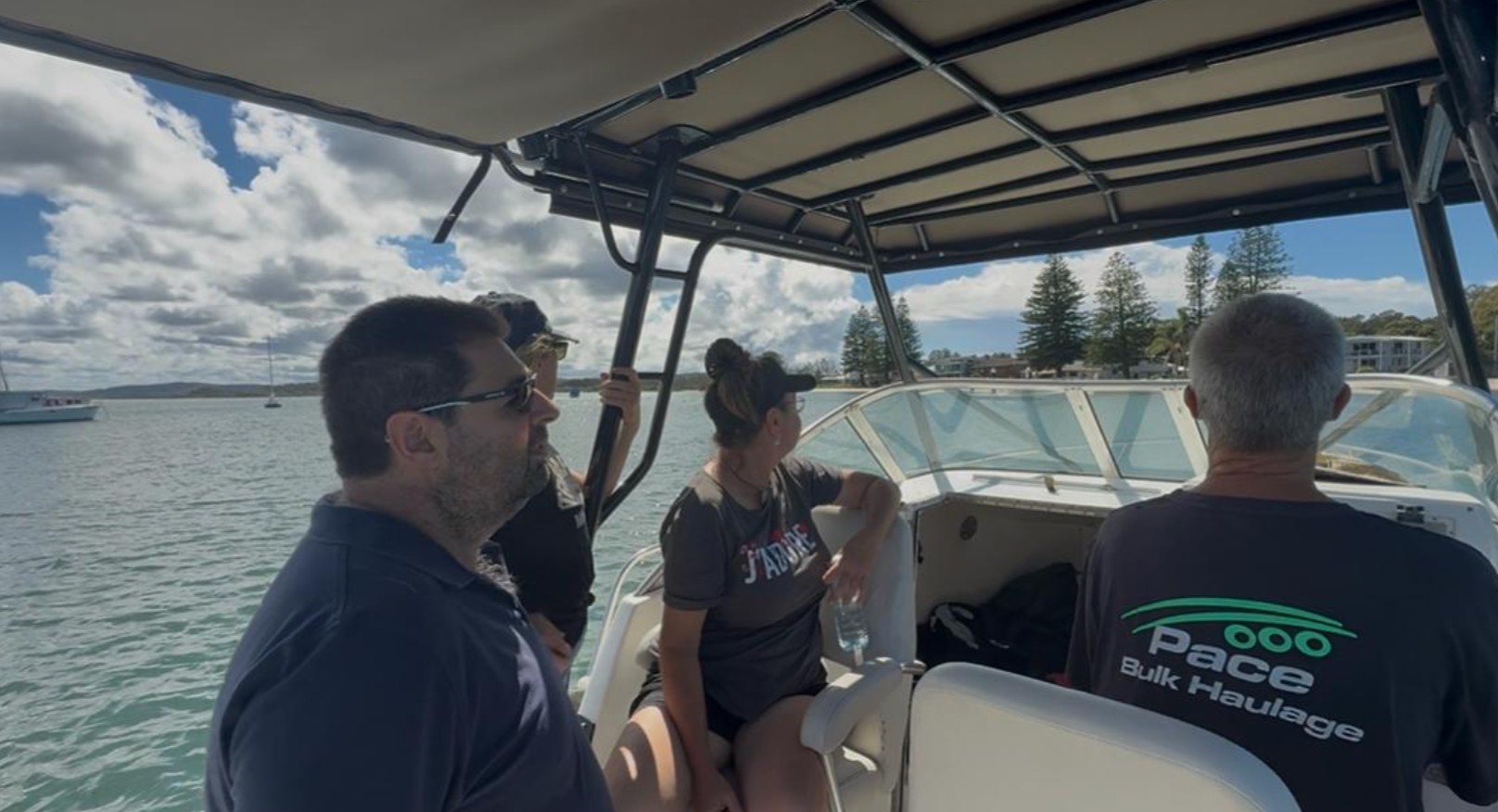
James Parnell has skippered charter boats in the Whitsundays, run the outer harbour for Sydney Ferries, and inspected commercial vessels for AMSA. Now he builds your Marine Order 504 safety management system, loads it into SMS Marine, and hands it over ready for the day an inspector steps aboard.
Or start a free trial and look around first — no card, no commitment.
The people building your SMS

James has spent his working life on every side of a commercial vessel. Ten years skippering charter boats in the Whitsundays. Years working as a commercial diver. Eight years in operations management at Sydney Ferries, including running the outer harbour, accountable for a passenger fleet and the people crewing it. 4 years as Eastern Australian Support Group Manager for the Royal Australian Navy. And then four years as an AMSA Marine Safety Inspector — the person who steps aboard and asks to see your paperwork.
He has held the ticket, run the fleet, and written the deficiency notice.

Clayton came up through the Royal Australian Navy as a clearance diver and has worked commercially in the water ever since. He holds Master 4 and MED 2 tickets and managed fleet operations at Sydney Ferries. His honours degree is in marine ecology — useful when an operation carries environmental conditions on its certificate.
The inspector years are why the system stands up to scrutiny. The decades before them are why it's something a crew will actually use.
The rules changed on 1 June 2025
The revised Marine Order 504 added mandatory fatigue management plans, drug and alcohol policies with crew acknowledgement, expanded operational procedures, master and Designated Person responsibility statements, stability records for vessel modifications, updated assembly stations, dangerous goods procedures, and emergency plans covering loss of propulsion and spills. There was no grace period.
If your SMS hasn't been rewritten since then, it doesn't meet the current requirement. AMSA has 2,300 domestic commercial vessel inspections planned for 2026–27, and has named safety management system implementation as a focus area.
Not sure where your SMS stands?
Send us your current safety management system and James will check it against AMSA's own verification tool, then send you a short written list of what's missing. Free, no obligation.
If you're under 7.5 metres and you qualify for AMSA's simplified SMS, we'll tell you that too — even though it means you probably don't need us yet.
What we load, and what keeps running
We build all of this for you and load it before you start. Then it stays current.
Manage vessel information, certificates and compliance records.
Track qualifications, inductions, medicals and competency records.
Create, review and manage operational risk assessments.
Schedule and record emergency drills and crew training.
Conduct and record safety briefings.
Manage preventative maintenance schedules.
Record incidents and corrective actions.
Maintain compliance through internal audits and management reviews.
Store and access emergency procedures instantly.
Generate compliance reports with one click.
What it costs
$395 a year for a single vessel, and $595 a year for two or more. All prices include GST. Assistance with loading data and certificates is available.
See full pricing →Simplify Safety. Strengthen Your Business.
Take control of compliance, reduce paperwork and improve safety outcomes with SMS Marine.
or call us on 0480 222 169
Frequently Asked Questions
Find answers to common questions about Marine Order 504 (MO 504), SMS Marine, and our Coxswain training.
Do I need a safety management system (SMS) for my vessel?
+
Yes. If you operate a domestic commercial vessel in Australia, Marine Order 504 requires a safety management system that is recorded, readily accessible and kept up to date. SMS Marine gives you that system in one place.
What does SMS Marine do?
+
SMS Marine is cloud software that manages your whole Marine Order 504 safety management system — vessels, crew and certificates, risk assessments, training and drills, toolbox talks, maintenance, logbooks, incidents, corrective actions, audits and audit-ready compliance reports.
How much does SMS Marine cost?
+
SMS Marine is priced as a one-off build plus an annual fee. For a single vessel it's from $950 to build and $395 a year. For operators running two or more vessels it's from $1,695 to build and $595 a year. All prices include GST. Full detail is on our pricing page.
Is my data secure and private?
+
Yes. Your information is stored in a secure cloud database and kept private to your organisation — it is never shared with other operators. Files are stored securely and access is controlled by user role.
Can I use it on board and on my phone?
+
Yes. SMS Marine runs in your web browser on any device — desktop in the office or phone on the vessel — so your records are always with you.
Does it work for a single vessel or a whole fleet?
+
Both. You can run one vessel or a whole fleet from the one account, with each vessel keeping its own crew, certificates, drills and records.
Do you also offer Coxswain training?
+
Yes. Mid Coast Marine Services also delivers Coxswain Grade 3 Near Coastal training. See the Coxswain section or contact us to enquire.
Marine Order 504 — the basics
What is Marine Order 504?
+
Marine Order 504 is the Australian rule that sets out what a domestic commercial vessel needs in order to operate legally and safely. It's made by the Australian Maritime Safety Authority (AMSA) under the Marine Safety (Domestic Commercial Vessel) National Law. In practice it covers two things: the certificate of operation your vessel needs, and the safety management system (SMS) you must have in place to get and keep it. Read more: What is Marine Order 504?
Who does Marine Order 504 apply to?
+
It applies to domestic commercial vessels — broadly, any vessel used for a commercial, governmental or research purpose in Australian waters, such as charter boats, ferries, fishing vessels, tour operators, workboats and hire-and-drive craft. The requirements are scaled to the vessel: smaller, lower-complexity vessels have fewer, and Class 4 hire-and-drive vessels have their own additional rules. Read more: What is Marine Order 504?
What changed on 1 June 2025?
+
The current version, Marine Order 504 (2024), replaced the 2018 version and took effect on 1 June 2025. It reshaped what your SMS must contain and made several topics explicit, mandatory requirements — including fatigue management, drug and alcohol policies, documented operational procedures, and owner and master responsibility statements. If your SMS was built under the old rules, it's worth reviewing against the new ones. Read more: What is Marine Order 504?
What must a safety management system (SMS) include?
+
For Class 1, 2 and 3 vessels, Schedule 1 of Marine Order 504 covers vessel and owner details, a risk assessment (including fatigue), owner/designated person/master responsibility statements, appropriate crewing, training, drills and induction, first aid and radio, documented procedures and a drug and alcohol policy, an emergency plan, recording of hazardous occurrences and non-conformances, maintenance, logbooks and records (kept at least 5 years), and a system to review it all at least every 12 months. Read more: What is Marine Order 504? Marine Order 504 operational procedures: practical guide.
Fatigue & crewing
Is fatigue management mandatory under Marine Order 504?
+
Yes. Since 1 June 2025, owners of Class 1, 2 and 3 vessels must include a fatigue risk management plan in their SMS. The plan must identify the risks of master and crew fatigue and set out how you will manage them, appropriate to the size and complexity of your vessel and operation. Your state or territory work health and safety obligations continue to apply as well. Read more: Fatigue risk management under Marine Order 504
How much sleep does AMSA recommend for crew?
+
AMSA's guidance is to aim for 7–9 hours' sleep per 24 hours, with at least 7 hours uninterrupted. The highest-risk window is 2 am to 6 am, with a secondary dip in the mid-afternoon, so plan demanding work for daylight hours where you can. AMSA also flags warning signs such as regularly working more than 12 hours, more than 60 hours a week, or having less than 10 hours' continuous rest between work periods. Read more: Fatigue risk management under Marine Order 504
Who is responsible for managing fatigue on board?
+
Everyone has a role. Owners provide a safe working environment and adequate rest, identify the risks, document how fatigue is managed, and develop the plan with the crew. Masters contribute to the plan and apply and monitor the controls during operations. Crew follow the plan, take rest opportunities when given, and report fatigue concerns promptly. Read more: Fatigue risk management under Marine Order 504
How do I work out the right crew for my vessel?
+
Under MO 504 your crewing has to be the output of a risk assessment, not a guess. The owner determines the appropriate crewing for each kind of operation by weighing factors such as the job itself, the tasks beyond navigation, fatigue, the number of people aboard, the vessel's design, crew qualifications, technology fitted, the area and conditions, voyage duration, emergency preparedness, maintenance and external support — and records the reasoning in the SMS. Read more: Crewing (manning) risk assessment under Marine Order 504
What is the 10-hour rest rule for crewing?
+
Marine Order 504 sets a minimum crewing table based on vessel length, and your crewing can never go below it. But you cannot simply default to those minimum numbers unless provision is made for the master and every crew member to have at least 10 hours of rest in each 24-hour period. If your operation and hours don't allow that, the minimum crew number isn't enough and you need to put on more people. Read more: Crewing (manning) risk assessment under Marine Order 504
What does "rest" mean under Marine Order 504?
+
"Rest" means a period when a person is genuinely free of all duties and functions, except in a real emergency. Being on standby, keeping half an eye on things, or being on call does not count as rest. Read more: Crewing (manning) risk assessment under Marine Order 504
Coxswain Grade 3 Training
Gain the practical skills and knowledge required to operate commercial vessels safely in sheltered waters.
Course Overview
- Operate commercial vessels up to 12 metres
- Practical vessel handling
- Marine safety and compliance
- Navigation fundamentals
- Emergency procedures
Duration: 1 day
Location: NSW